Bad Bunny’s Halftime Show Drove an Over 100% Increase in Searches for Spanish Lessons
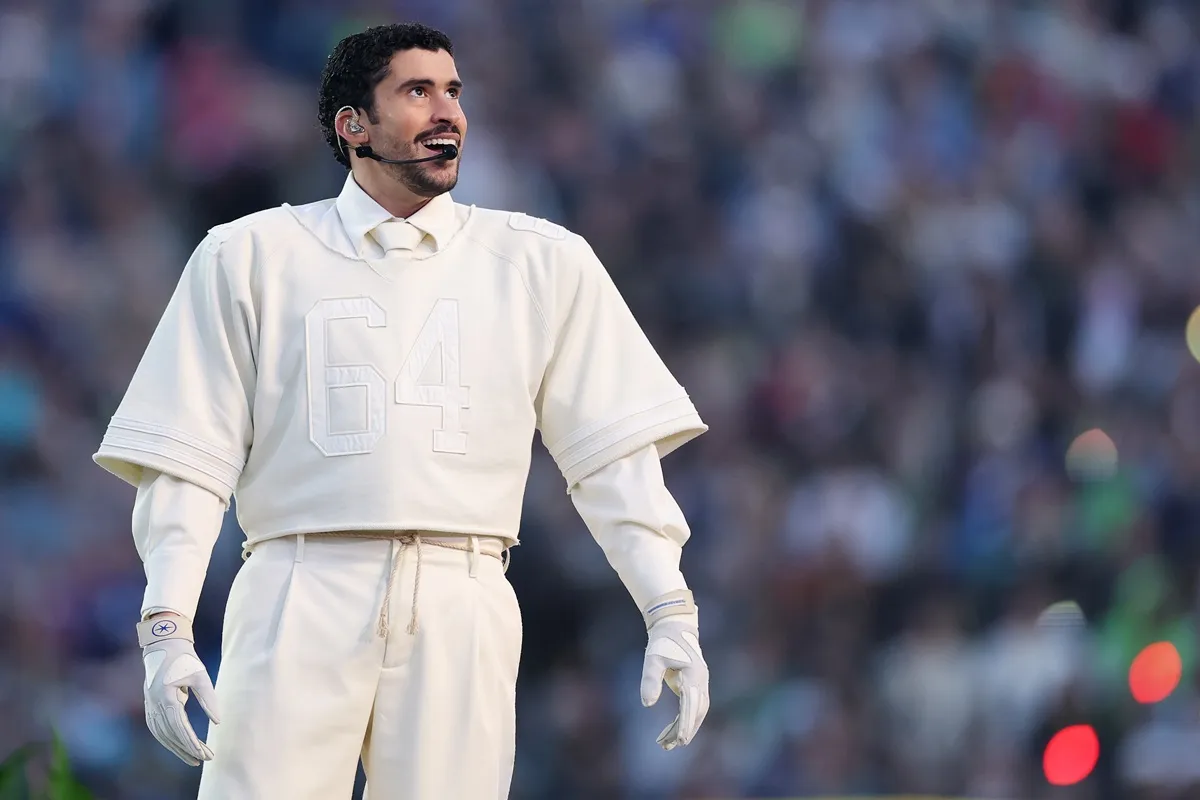
Bad Bunny’s Super Bowl halftime show made history because, with the exception of Lady Gaga’s guest appearance, it was entirely in Spanish. This sparked a not-inconsiderable amount of backlash. Still, it appears that Bad Bunny’s performance has inspired many people to learn Spanish. In the days after the Super Bowl, searches for Spanish lessons increased considerably.
Bad Bunny joked about giving people time to learn Spanish before the halftime show
In Bad Bunny’s Saturday Night Live monologue, he addressed the backlash to his halftime show.
In Spanish, he said he believed people were excited about the show, “especially all the Latinos and Latinas in the whole world, and here in the United States, all the people who have worked to open doors. More than an achievement for me, it’s a milestone for all of us, demonstrating that our footprints and our contribution in this country, no one can ever remove nor erase.”
He then switched back to English, joking, “And if you didn’t understand what I just said, you have four months to learn.”
Just ahead of the Super Bowl, though, he said people didn’t need to understand his lyrics to enjoy the show.
“It’s going to be easy, people only have to worry about dancing,” he said at the Super Bowl LX Halftime Show press conference (via USA Today). “They don’t even have to learn Spanish. Better they learn to dance. There is no better dance than the one that comes from the heart.”
Bad Bunny’s halftime show appeared to drive up searches for Spanish lessons
According to analysis by language learning app Preply, an average of 22,700 people worldwide searched for “learn Spanish” every day last month. In the days before the Super Bowl, this climbed to 35,500 each day. After the Super Bowl, searches spiked even higher, hitting 63,000 per day. This is a 178% increase from normal levels of interest.
“As the first Spanish-language artist to headline the Super Bowl halftime show, Bad Bunny’s performance marked a cultural milestone,” Anna Pyshna, a spokesperson from Preply, told Showbiz Cheat Sheet. “What is striking in the data is how quickly viewers moved from watching to acting. We are seeing people go beyond entertainment and actively look for ways to understand the language they heard on stage.”
Pyshna believes the searches for Spanish lessons and Bad Bunny’s lyrics represent a shift in the way people interact with music.
“This behaviour reflects a wider shift in how audiences engage with global music,” she said. “Listeners are not just passively streaming songs; they are actively searching for meanings and translations. Viral cultural moments like a Super Bowl halftime show can act as a gateway into language learning. Fans start with a lyric or phrase, then move towards classes, apps, and structured learning to feel more connected to the music and culture.”
She anticipates interest in learning Spanish will continue to grow
According to Pyshna, Bad Bunny’s Spanish-language Super Bowl show sets him apart from other artists.
“Historically, it can be observed that international artists such as Shakira, Ricky Martin, and Enrique Iglesias reached U.S. mainstream success by leaning into English-language hits,” she said. “Even at the 2020 halftime show, Shakira and Jennifer Lopez blended Spanish into their performance, but English still carried much of the set. Bad Bunny may not follow that playbook. As one of the most outspoken advocates of Latin culture in music, he’s already proven he can dominate global charts with Spanish.”
She anticipates that more and more people will seek to learn the language.
“With ‘learn Spanish’ searches expected to be at their highest levels in five years, we can expect that interest in Spanish learning will only continue to grow as fans revisit the performance, explore lyrics, and seek a deeper connection to the music they discovered during the halftime performance.”