From ‘Streets of Philadelphia’ to ‘Streets of Minneapolis’: Bruce Springsteen’s History of Politically-Charged Songs
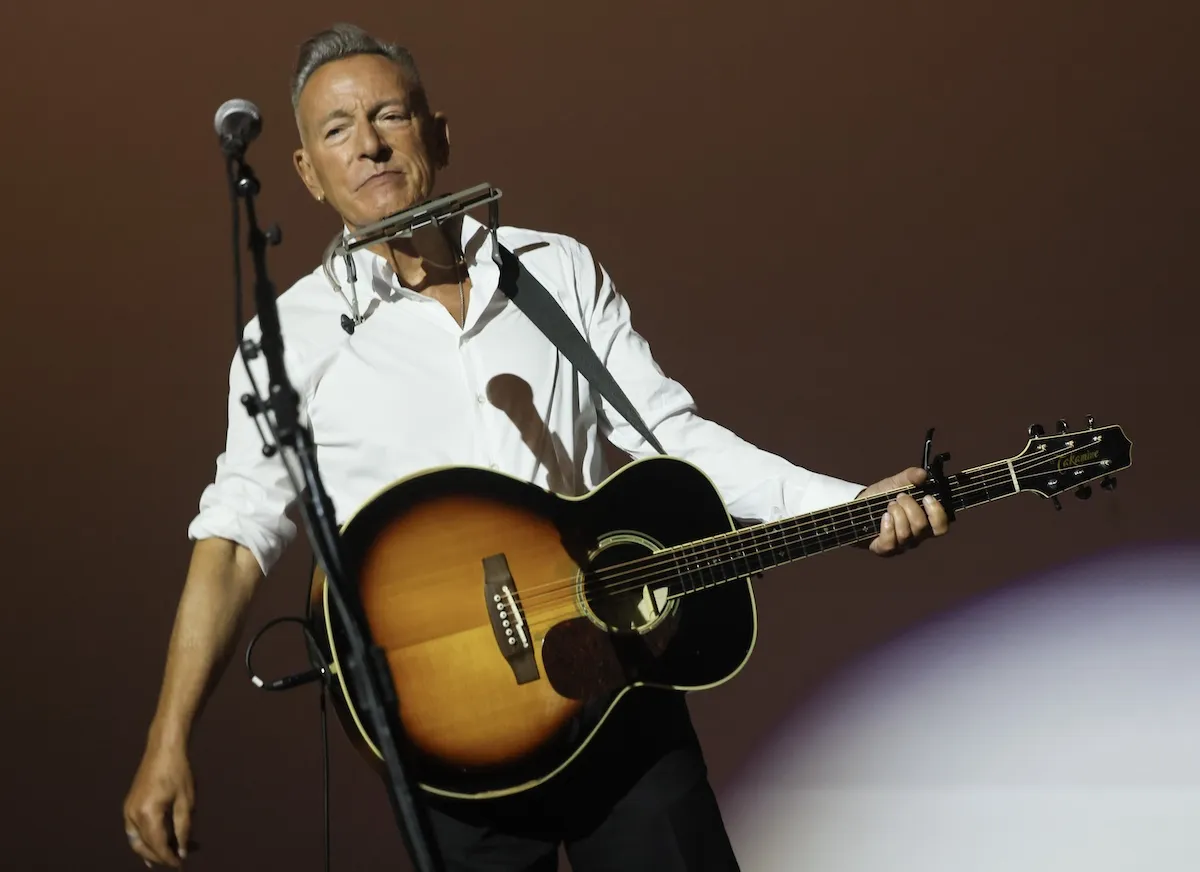
Bruce Springsteen is speaking out.
On Wednesday, The Boss dropped a new track, “Streets of Minneapolis,” which addresses the killings of Alex Pretti and Renee Good, who were both shot by federal agents this month in Minnesota.
“I wrote this song on Saturday, recorded it yesterday and released it to you today in response to the state terror being visited on the city of Minneapolis,” Springsteen wrote in a post on Blue Sky. “It’s dedicated to the people of Minneapolis, our innocent immigrant neighbors and in memory of Alex Pretti and Renee Good. Stay free.”
The song’s blunt lyrics call out “King Trump’s private army” and his “federal thugs,” as well as Stephen Miller and Kristi Noem. “We’ll take our stand for this land/And the stranger in our midst,” he sings. “Here in our home, they killed and roamed/In the winter of ’26/We’ll remember the names of those who died/On the streets of Minneapolis.”
After its release, “Streets of Minneapolis” quickly soared to No. 1 on the iTunes top songs chart. It also prompted an increase in streams of many of Springsteen’s other songs, including past tracks that also address socio-political issues. The Grammy-winner has a long history of releasing politically-charged songs, touching on issues such as poverty, the Vietnam War, and the AIDS epidemic. Here are some of the highlights from his vast back catalogue.
“Lost in the Flood”
Springsteen’s songs often focus on the lives of ordinary, blue-collar Americans navigating a fractured society, a trend going back to his earliest creative efforts. “Lost in the Flood,” from his 1973 debut album Greetings From Asbury Park, concerns a Vietnam vet who returns home from the war to find his country beset by gang violence, economic despair, and a drug epidemic.
“Born in the USA”
The Boss returned to the plight of veterans in his 1984 anthem “Born in the USA.” Widely misunderstood as being straightforwardly patriotic (Ronald Reagan infamously referenced it at one of his campaign rallies), he sings from the point of view of a man who returns home from Vietnam to a hostile and indifferent country, where he’s unable to find a job and receives little support from the government that sent him “off to a foreign land/To go and kill the yellow man.”
“Roulette”
Springsteen took up the theme of looming nuclear disaster in his song “Roulette.” Written in the late 1970s in the wake of the Three Mile Island meltdown but not released until 1988, it concerns a man who must flee his home with his family. When he questions authorities about what’s happening, he gets no answer, leaving him to feel that he’s “expendable.”
“I don’t know who to trust and I don’t know what I can believe,” he sings. “They say they wanna help me but with the stuff they keep on sayin’/I think those guys just wanna keep on playin’.”
“Streets of Philadelphia”
Recorded for the Oscar-winning movie Philadelphia, the mournful “Streets of Philadelphia” addresses the AIDS crisis head-on. The song’s character is a lonely, isolated man suffering from the disease and mourning for “friends vanished and gone.” “Oh brother are you gonna leave me wastin’ away/On the streets of Philadelphia?” Springsteen sings, calling for compassion and empathy for people with AIDS, who were frequently ostracized and stigmatized because of their diagnosis and their sexuality.
“The Ghost of Tom Joad”
With a title that references John Steinbeck’s classic novel The Grapes of Wrath, 1995’s “The Ghost of Tom Road” bluntly criticizes an unforgiving economic system that leaves people struggling to get by, including migrant workers from Mexico seeking a piece of the American dream. “Shelter line stretching around the corner/Welcome to the new world order,” Springsteen sings. “Families sleeping in the cars in the southwest/No home, no job, no peace, no rest.”
Springsteen kept up the political theme with several other songs on the album, including “Youngstown,” which addresses industrial decay in Rust Belt cities, and “Balboa Park,” about homeless immigrant sex workers in San Diego.
“American Skin (41 Shots)”
One of Springsteen’s most explicitly political songs, 2001’s “American Skin (41 Shots)” addresses the death of Amadou Diallou, an unarmed man killed by NYPD police officers in 1999. Officers, mistaking Diallou for a rape suspect, chased Diallou into the vestibule of an apartment building. They opened fire when he reached for his wallet, believing he was drawing a weapon, with 19 of the 41 shots fired hitting Diallou. “Is it a gun? Is it a knife? Is it a wallet? This is your life … No secret my friend/You can get killed just for living in your American skin,” Springsteen sings on the track.
For more news and exclusive interviews, follow Showbiz Cheat Sheet’s Instagram.